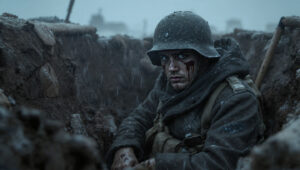
Saving Private Ryan: The Profound Weight of Leadership and Moral Choice in Spielberg’s Masterpiece

Steven Spielberg’s Saving Private Ryan is not merely a war film; it is a searing psychological exploration into the very concept of the “Value of a Life.” As audiences worldwide continue to seek out this cinematic landmark to experience its unparalleled realism, we, at AMC Cinema Global, are compelled to delve deeper into the internal landscape of Captain John Miller. How does one lead men through unimaginable chaos when the very mission seems Sisyphean? This film offers a profound study in self-development under the most extreme duress imaginable.
The Human Cost of Command: Captain Miller’s Crucible
At the heart of Saving Private Ryan lies the agonizing burden shouldered by Captain Miller, portrayed with masterful nuance by Tom Hanks. Spielberg masterfully depicts the psychological toll of command, forcing viewers to confront not just the physical horrors of war, but the deep emotional and ethical quandaries that define leadership. The film doesn’t shy away from the sheer brutality of the Normandy landings, a visceral opening that has become a benchmark for war cinema. But beyond the battlefield’s immediate carnage, Saving Private Ryan invites us to meditate on the immeasurable cost of every life, and the impossible decisions leaders must often make.

The Shaking Hand: A Symbol of Internal Conflict
Among the film’s most potent and enduring symbols is Captain Miller’s perpetually shaking hand. This physical manifestation of his inner turmoil is a powerful testament to the profound struggle of a man tasked with remaining stoic and resolute for his soldiers, all while battling the ghosts of his own trauma and the existential weight of his mission. From a self-development standpoint, Miller’s journey illustrates a timeless truth: courage is not the absence of fear, but the indomitable capacity to act in spite of it. His leadership style, characterized by leading from the front and by example, offers a potent and enduring lesson for anyone navigating the complexities of responsibility. This emphasis on leading by example resonates deeply, mirroring the ethos found in many high-stakes professional environments, from military operations to corporate boardrooms.

Omaha Beach: A Technological Revolution in Immersive Cinema
From a technical and cinematic perspective, the film’s opening 20 minutes—depicting the D-Day landing on Omaha Beach—didn’t just redefine war movies; it fundamentally reshaped the landscape of Hollywood filmmaking. Spielberg, in collaboration with cinematographer Janusz Kamiński, employed a revolutionary approach to camera work and film stock. By utilizing a shutter angle of 45 and 90 degrees, they achieved a jagged, intensely visceral, and hyper-realistic visual texture that thrusts the audience directly into the heart of the mayhem. This technique, combined with the use of slow-motion to capture the impact of bullets and explosions, creates an overwhelming sense of immediacy.
The film’s sonic landscape is equally groundbreaking. The intricate 12-channel sound design, particularly potent when experienced in IMAX, created a fully immersive 360-degree battlefield. The cacophony of gunfire, explosions, and desperate cries envelops the viewer, cementing Saving Private Ryan as the enduring gold standard for sonic immersion in cinema. This technical prowess not only amplifies the film’s realism but also serves to underscore the overwhelming sensory assault experienced by soldiers, making the psychological impact all the more profound. Films focused on intense, immersive experiences, especially within the Action genre, often draw inspiration from its pioneering techniques.
The Impact of Visual Storytelling
The deliberate choice to shoot on 35mm film stock with a limited depth of field further enhanced the raw, documentary-like feel. Decoupling the shutter speed from the standard 180-degree rule, Kamiński intentionally introduced motion blur and a specific grain structure, mimicking the appearance of newsreel footage while simultaneously heightening the frenetic energy of the combat. This artistic decision was not merely aesthetic; it was a crucial component in Spielberg’s strategy to dismantle the audience’s detached perspective, forcing a more empathetic and visceral connection to the soldiers’ plight. The film’s technical achievements have rightfully earned it a place among the seminal works of cinematic art and technology.
The Weight of Sacrifice: Analyzing the Moral Calculus
Saving Private Ryan‘s narrative, inspired by the story of the Niland brothers, centers on a seemingly simple yet ethically complex mission: to bring the last surviving enlistee of a family, Private First Class James Francis Ryan (Matt Damon), home from the war. Captain Miller and his squad are tasked with traversing a war-torn France to locate and extract Ryan, a mission that comes at the cost of significant resources and, more critically, the lives of the men assigned to it.
This premise immediately raises profound questions about the value of a single life versus the collective. Is it justifiable to risk multiple lives for one, especially in the context of a total war effort? The film wisely avoids offering easy answers, instead portraying the agonizing deliberation and the growing resentment among Miller’s men. Sergeant Horvath (Tom Sizemore), a loyal second-in-command, embodies the soldier’s perspective—the pragmatic need for the mission to be worthwhile. Conversely, soldiers like Private Reiben (Vin Diesel) voice the understandable frustration and sense of unfairness felt by those who perceive the mission as a waste of their own chances of survival.

“Ce Que Disent les Critiques” – What the Critics Said
Upon its release in 1998, Saving Private Ryan was met with near-universal critical acclaim, lauded for its unflinching realism and emotional depth. Variety hailed it as « a brutally realistic, harrowing and deeply moving film that stands as one of the screen’s great war epics. » Roger Ebert of the Chicago Sun-Times praised Spielberg’s direction, noting, « Spielberg has an understanding of the reality of war that is as visceral and palpable as any director I have ever seen. » The film’s technical innovations, particularly the opening D-Day sequence, were widely celebrated as revolutionary.
Globally, the film garnered significant awards, including five Academy Awards (including Best Director for Spielberg and Best Cinematography) and a BAFTA Award for Best Film. While its graphic depiction of violence sparked debate, the overwhelming consensus recognized its profound impact and artistic merit. The film’s Rotten Tomatoes score consistently remains in the high 90s, a testament to its enduring critical appreciation. It is frequently cited in discussions of the greatest war films ever made, often appearing alongside classics like Apocalypse Now and Platoon.
Where To Watch This Cinematic Legacy
For those seeking to immerse themselves in the visceral reality and profound narrative of Saving Private Ryan, the film is often available through various streaming platforms and digital rental services. While availability can fluctuate, platforms that frequently host critically acclaimed war dramas and historical epics are your best bet. You can often find it alongside other powerful films within the Drama genre collection. Additionally, major video-on-demand services typically offer it for purchase or rental, ensuring this essential piece of cinematic history remains accessible.
The Legacy: Beyond the Battlefield
Saving Private Ryan transcends its genre, offering enduring lessons that resonate far beyond the context of World War II. Captain Miller’s final, whispered words to Ryan – « Earn this » – serve as a powerful, almost sacred injunction. It’s not just a charge to Ryan, the sole survivor, but an implicit challenge issued directly to the audience: to live lives of purpose, integrity, and gratitude, thereby honoring the immense sacrifices made by those who came before us. This imperative for personal excellence and mindful living is a theme that echoes throughout many narratives of resilience and courage, making the film a timeless source of inspiration.
The enduring success of Saving Private Ryan lies in its masterful blend of harrowing realism and deep humanism. It forces us to confront the brutal realities of conflict while simultaneously celebrating the resilience of the human spirit and the enduring power of moral choice. It is a film that demands to be seen, to be felt, and ultimately, to be remembered.
It continues to influence filmmaking, particularly in the Action and Drama categories, setting a high bar for depicting the authentic chaos and psychological toll of combat. The technical innovations pioneered for this film have become standard practice, influencing how filmmakers approach immersive sound design and realistic visual effects even today.
Ultimately, Saving Private Ryan remains a monumental achievement in cinema, a stark reminder of the costs of war and a profound meditation on the weight of leadership, the value of life, and the critical importance of living a life worthy of the sacrifices made. To truly appreciate the artistry and impact, experiencing it remains essential.
Conclusion: The Final Question
« As Miller whispers his final words, ‘Earn this,’ he challenges not just Ryan, but the audience. It’s a call to live a life worthy of the sacrifices made by others—a powerful mantra for personal excellence. »
Written by
AMC CINEMA GLOBAL TEAM
Our team of passionate experts dissects the latest cinematic releases and streaming trends for you with surgical precision.