NYU Film Students Will Now Be Given Tools to Make Movies With AI
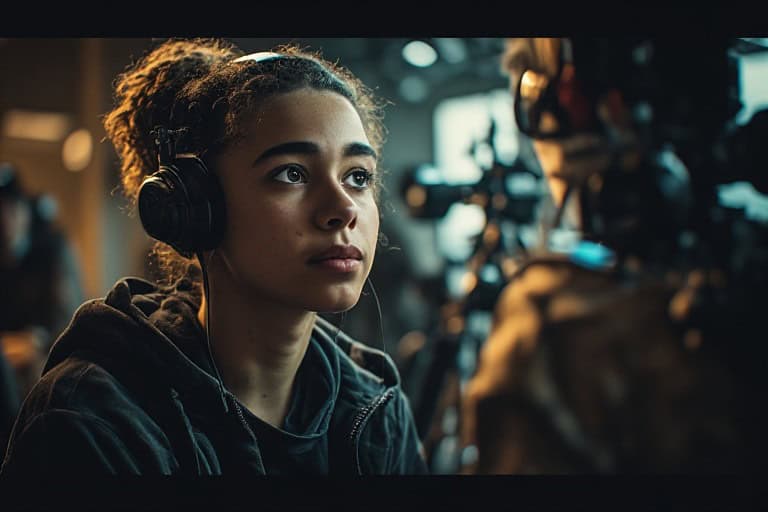
New York University’s Tisch School of the Arts has never been a place that shies away from the future of storytelling. From Spike Lee to Todd Solondz, the institution has long been a launchpad for filmmakers who challenge convention. Now, it is taking a step that could redefine what « film school » even means. NYU Tisch is cutting a formal deal with Runway AI to provide students with free access to generative video tools, AI credits, and specialized training across several of its most forward-thinking programs. According to The Hollywood Reporter, the arrangement covers the Hypercinema Lab, the Interactive Telecommunications Program (ITP), and the Interactive Media Arts (IMA) program. The goal is not to replace traditional filmmaking, but to add a powerful new instrument to the student toolbox one that can generate cinematic visuals from a text prompt.

What the NYU–Runway Deal Actually Includes
The agreement, announced in April 2026, deepens a relationship that began with Runway’s earlier integration into NYU’s Virtual Production curriculum. But this new phase is broader in scope and more generous in access. Students enrolled in ITP, IMA, and the Hypercinema Lab will receive free credits for Runway’s full suite of AI video tools—credits that can otherwise cost hundreds of dollars per month. Runway CEO Cristóbal Valenzuela, himself an ITP alumnus, framed the partnership in historical terms. « Twenty years ago when you went to film school or art school, the thing they gave you was a camera and maybe an Adobe subscription, » he told THR. « Now they’re giving you access to Runway, which allows you to do pretty much anything you want. »
The Programs Involved
The Hypercinema Lab is a university-wide initiative housed within Tisch that explores emerging media and cinematic storytelling. ITP and IMA are graduate-level programs known for their playful, boundary-pushing work at the intersection of technology, art, and communication. Notably, Tisch’s mainline film school—the program that produced Spike Lee and Kasey Lemmons—is not part of this agreement, at least for now. The deal is focused on students already working at the edge of tech and art, where AI tools feel like a natural extension of their practice.
Free Credits and Training
Runway’s video-generation credits are not cheap. A single high-quality AI-generated video clip can consume significant computing resources. But according to both Valenzuela and Tisch dean Rubén Polendo, the credits will be made available on a « generous if not unlimited basis. » That means students can experiment freely, integrate AI into their thesis projects, and develop workflows that blend traditional cinematography with machine-generated imagery.
Why NYU Is Embracing AI in Film Education
Dean Rubén Polendo has been explicit about the philosophy behind the move. « Our film programs have never been about teaching students to become cookie cutter, » he said. « This is an invitation to try another mode of working. » Polendo, who received a 2025 Guggenheim Fellowship for AI and Performance, sees the initiative as a way to answer urgent questions in real time. « What we’re asking is what bridge can we build into this really innovative interface between film and visuals and large language models, and navigating the ethics of generating original content, » he explained. The goal is not blind adoption, but critical engagement. Students will be encouraged to explore where human creativity ends and machine assistance begins—and to document that boundary as it shifts.
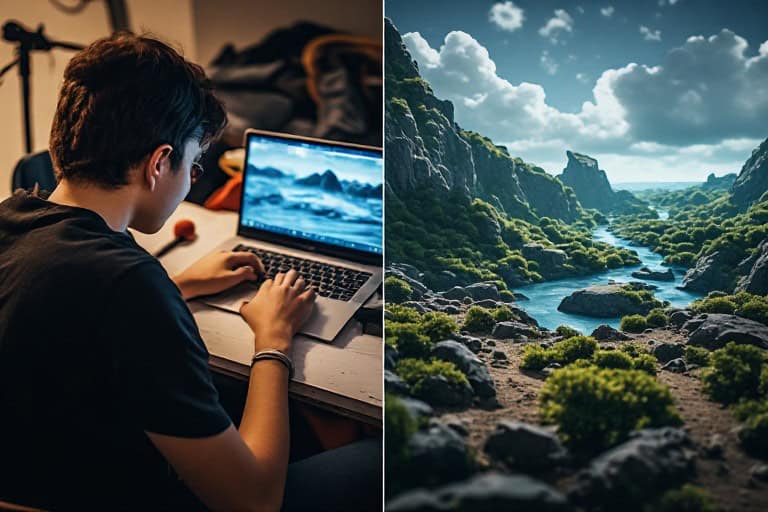
For students working with limited budgets, the appeal is obvious. Physical shoots are expensive. Location permits, equipment rentals, crew, and post-production can easily push a short film into the thousands of dollars. AI tools offer a way to visualize ambitious concepts that would otherwise be impossible to produce. A student who dreams of shooting a sci-fi epic on a distant planet no longer needs a Hollywood budget—they need a well-crafted prompt and access to Runway. To explore how AI is reshaping other areas of cinematic technology, visit our Cinematic Tech section.
The Broader Battle Over AI and Art
NYU’s decision lands in the middle of a heated cultural debate. Advocates argue that AI democratizes filmmaking, giving voice to creators who lack resources. Opponents worry that it devalues traditional craft, displaces crew jobs, and raises thorny questions about authorship and originality. Film schools have become the latest battleground in this war. USC already has licensing deals with Runway. Other institutions are watching closely to see how NYU’s experiment unfolds. Valenzuela claims he is seeing little resistance from either studios or academia. « Acceptance of this type of models within studios, schools and companies is large already, » he said. « There might be a very small minority [objecting]. » But that minority includes prominent filmmakers and industry professionals who see generative AI as an existential threat to their craft.
What Students Are Actually Making
Early results from NYU’s Virtual Production courses suggest that AI is being used less as a replacement for filmmaking and more as a previsualization and concepting tool. Students generate mood boards, test camera angles, and explore visual styles before committing to expensive shoots. Some are incorporating AI-generated elements directly into their final films—backgrounds, creature designs, abstract sequences. The technology is still imperfect. AI-generated video often struggles with consistency across shots, realistic human motion, and fine detail. But for students learning to work within constraints, those limitations become creative challenges rather than deal-breakers.
The Ethics Question
Polendo’s emphasis on « navigating the ethics » is not just academic rhetoric. Runway’s models are trained on vast datasets that include copyrighted material, a fact that has sparked lawsuits and protests. NYU’s decision to partner with Runway means students will be working with tools whose provenance is contested. The university appears to be betting that hands-on experience—paired with critical discussion—will prepare students better than avoidance. Whether that bet pays off will depend on how thoughtfully the curriculum addresses these concerns. For a deeper look at how streaming platforms and studios are grappling with similar questions, browse our Streaming Guides.
What This Means for the Future of Film School
If NYU’s experiment succeeds, it could accelerate a shift already underway. Film schools have been slowly integrating virtual production, LED volumes, and real-time game engines into their curricula. AI is the next logical step—and potentially the most disruptive. For prospective students, the calculation is changing. A film school that offers free access to cutting-edge AI tools becomes more attractive than one that doesn’t. For studios and production companies, the pipeline of graduates trained in these workflows becomes a talent pool they can draw from immediately. For Runway, the partnership is a long-term investment in brand loyalty. Students who learn on Runway are more likely to use it when they enter the industry. That’s the same playbook Adobe ran for decades. To see how this shift is playing out in television production, explore our TV Shows section.
For now, the mainline film school remains unchanged. Spike Lee’s students will still shoot on the streets of Manhattan. But the writing on the wall is clear: the next generation of filmmakers will be fluent in both analogue and algorithmic tools. NYU is making sure its students are ready. For those interested in the genres being reshaped by these tools, our Sci-Fi watchlist and Drama watchlist offer starting points. And for the latest trailers, including AI-assisted projects, visit our Trailers page.

Conclusion: A New Chapter in Filmmaking Education
NYU Tisch’s partnership with Runway AI is more than a tech upgrade. It is a statement about what film education should look like in 2026 and beyond. The university is not abandoning the camera—it is adding a new lens through which students can see and shape stories. Whether this experiment produces groundbreaking art or cautionary tales remains to be seen. But one thing is certain: the conversation about AI in filmmaking has moved from theoretical debate to practical application. And the next generation of directors, editors, and visual artists will enter the industry already fluent in both worlds.
What do you think? Let us know in the comments below!
Key Details
- Institution: NYU Tisch School of the Arts
- AI Partner: Runway AI
- Programs Involved: Interactive Telecommunications Program (ITP), Interactive Media Arts (IMA), Hypercinema Lab
- Announcement Date: April 10, 2026
- Key Figures: Rubén Polendo (Dean, NYU Tisch), Cristóbal Valenzuela (CEO, Runway)
- What Students Get: Free AI credits, full access to Runway’s suite, specialized training
Sources
- Steven Zeitchik, « Some NYU Film Students Will Now Be Given Tools to Make Movies With AI (Exclusive), » The Hollywood Reporter, April 10, 2026. Link
- « Runway Expands Collaboration with NYU Tisch School of the Arts, » Runway, April 10, 2026. Link
- Steven Zeitchik, « Some NYU Film Students Will Now Be Given Tools to Make Movies With AI, » Yahoo News, April 10, 2026. Link
Written by
AMC CINEMA GLOBAL TEAM
Our team of passionate experts dissects the latest cinematic releases and streaming trends for you with surgical precision.



No reply to “NYU Film Students Will Now Be Given Tools to Make Movies With AI”